DESIGNED TO MAKE ROOM FOR MORE

DESIGNED TO MAKE ROOM FOR MORE

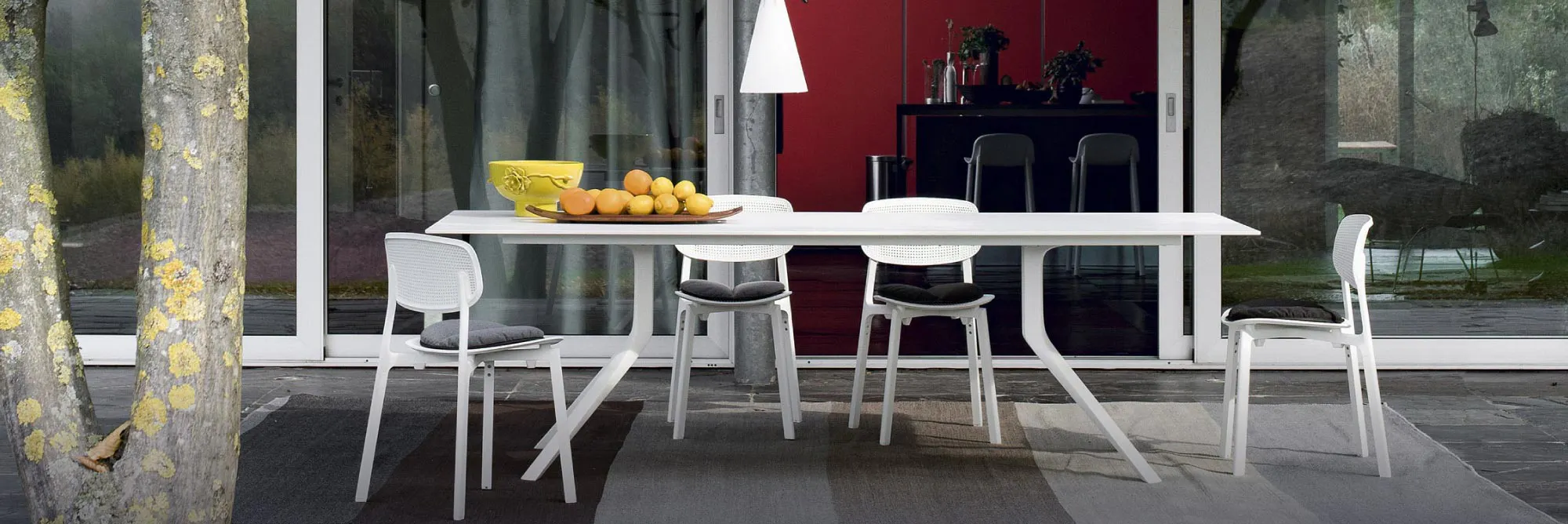
The evolution of Kristalia’s extendable tables.

A dining table is so much more than a place to gather for a meal. It becomes the centre of everyday rituals, spontaneous celebrations, long conversations and the moments that bring people together.

But the way we live is constantly changing. Our homes are becoming more adaptable, our spaces more considered, and our furniture is expected to respond.

For over two decades, Italian furniture brand Kristalia has explored this relationship between design and daily life, creating extendable tables that bring together technical innovation, refined silhouettes and remarkable versatility.

The philosophy is simple: intelligent design that adapts to the way we live.
EIGHT DESIGNS. ONE SHARED PHILOSOPHY.

Over the following two decades, Kristalia continued to challenge conventional thinking, collaborating with designers who brought different perspectives to the relationship between form and function.

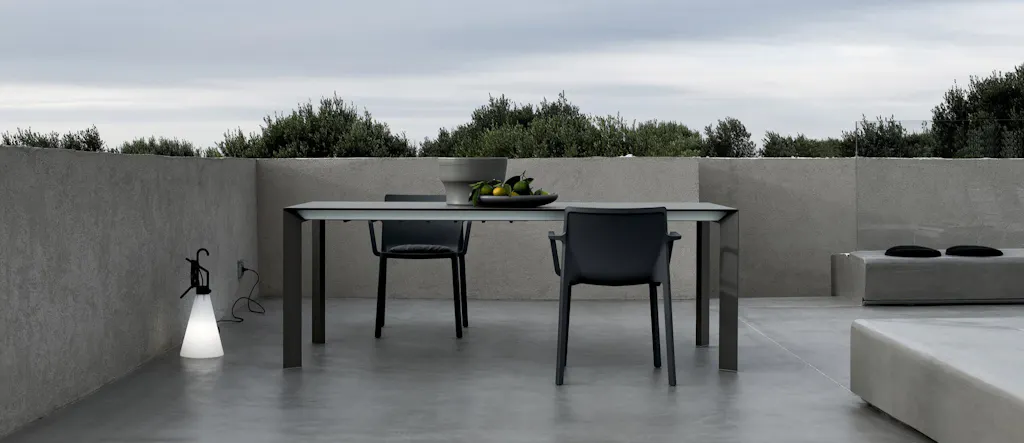
Each table represents a distinct chapter in that evolution.

Designed by Bartoli Design SUSHI  →

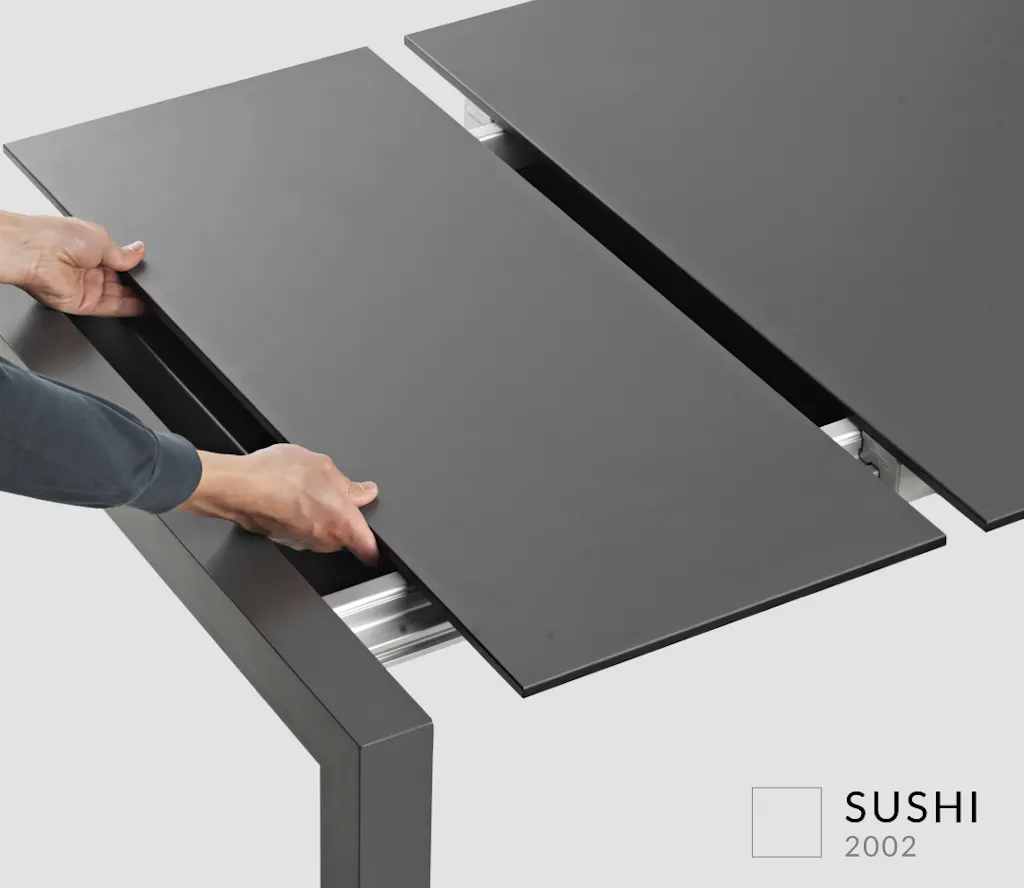
SUSHI | 2002

The table that began Kristalia’s exploration of intelligent extension has become one of its most enduring designs. Created by Bartoli Design in 2002, Sushi combines a precise aluminium structure with an exceptionally restrained silhouette.

More than twenty years later, its evolution continues through materials. Originally conceived as an exercise in minimalism and engineering, Sushi has been continually updated with new dimensions and surfaces, from FENIX-NTM and glass to DEKTON. Kristalia’s latest expansion of FENIX colours and introduction of VIS surfaces bring fresh possibilities to a design that has never stood still.

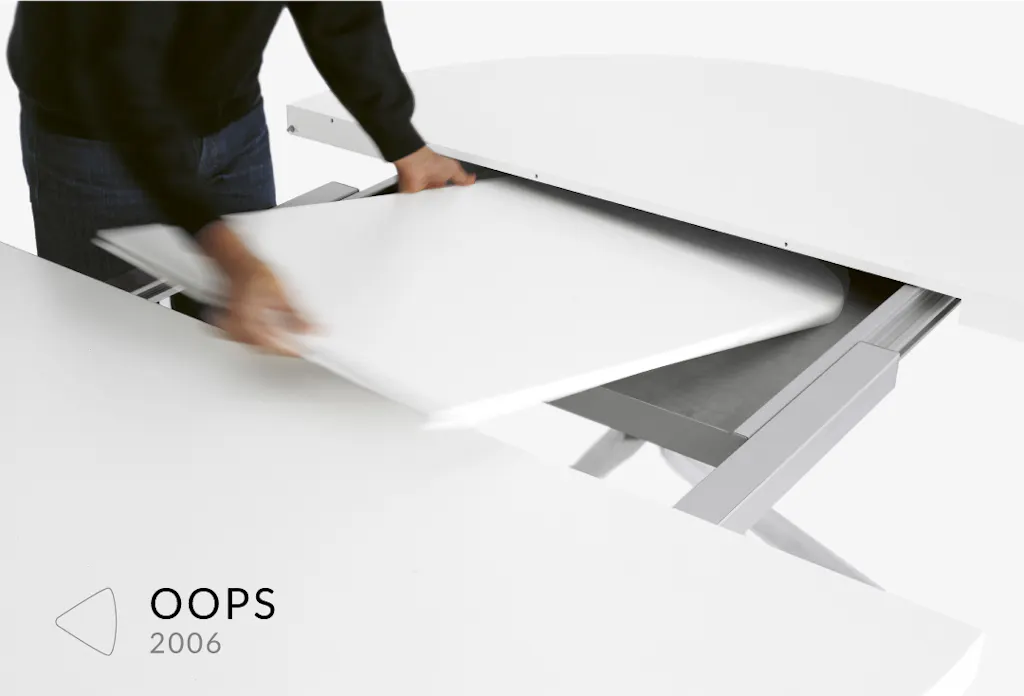
OOPS | 2006

With Oops, designer Monica Graffeo challenged the assumption that an extendable table needed to be rectangular. Introduced in 2006 as Kristalia’s first round extendable table, its circular top transforms into an elliptical form, allowing a more sociable arrangement to accommodate additional guests.

Nearly two decades later, the collection entered another chapter. The 2025 evolution introduced a square extendable version with softened corners and updated extension technology, alongside fixed round and rectangular options. Oops demonstrates how a single design idea can evolve to accommodate different spaces and ways of gathering.

Designed by Monica Graffeo OOPS →

Designed by Bartoli Design NORI →

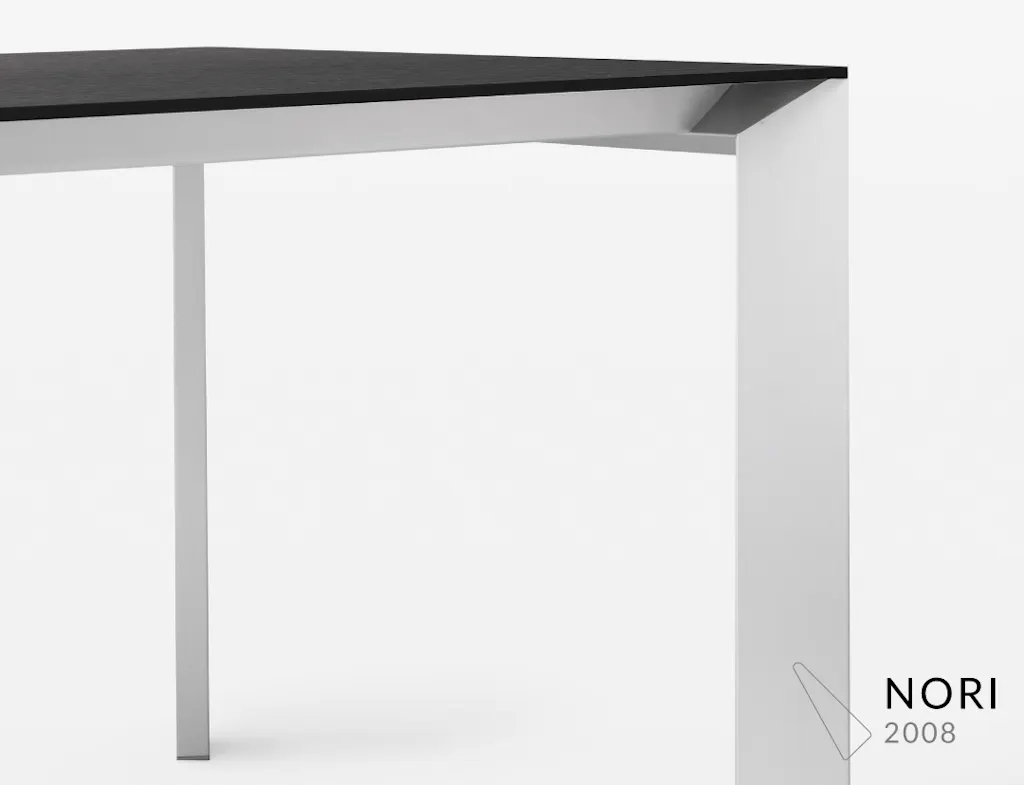
NORI | 2008

Following the success of Sushi, Bartoli Design returned to the challenge of combining structural strength with visual lightness.

Nori’s distinguishing feature lies in the geometry of its legs. Their sharp cross-section creates a more dynamic architectural expression, while sophisticated engineering allows the table to achieve generous dimensions without compromising stability.

Its material evolution is equally interesting. Contemporary options include FENIX, DEKTON and glass, while Kristalia’s newer VIS surfaces introduce further opportunities for texture, colour and material contrast. Nori shows how engineering can expand creative freedom rather than restrict it.

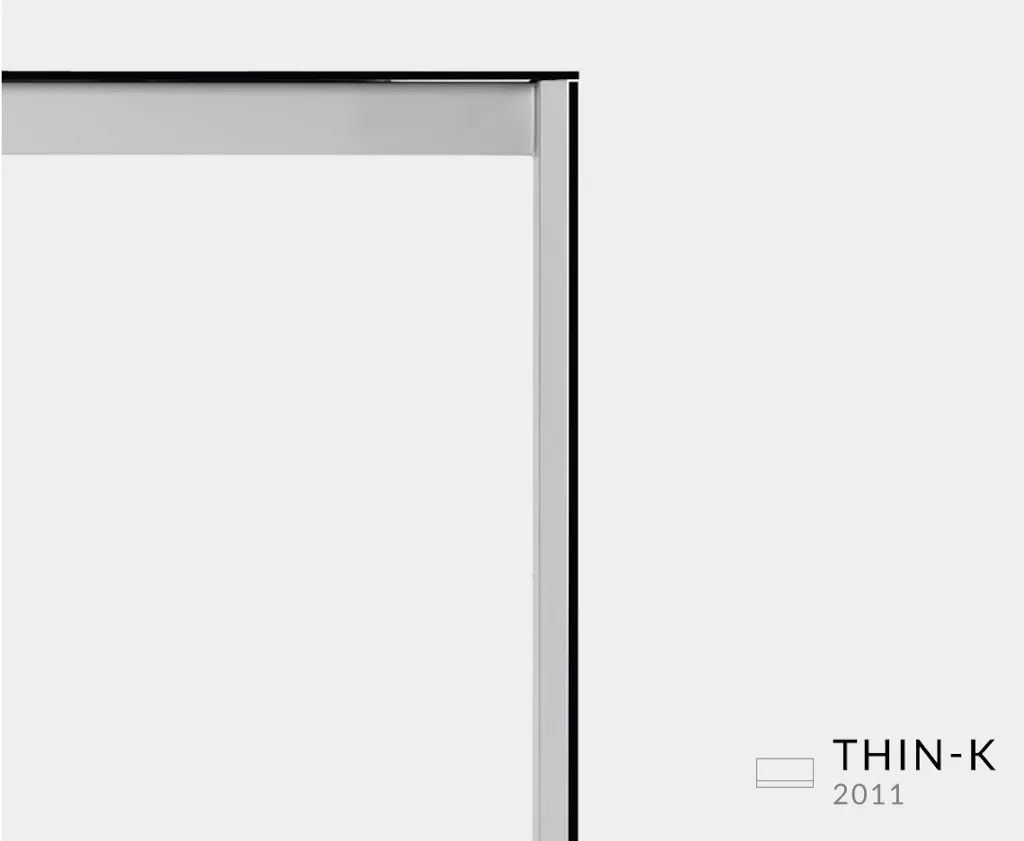
THIN-K | 2011

How thin can a table become before its structural integrity is compromised?

That question sits at the heart of Luciano Bertoncini’s Thin-K. Its metal tabletop measures just 6 mm thick, yet the design can extend to considerable lengths while retaining its strength and remarkably slender appearance.

The latest material development introduces an unexpected contrast. Argilla, a hand-applied textured finish, brings a more tactile, artisanal quality to a table defined by industrial precision. The finish also offers high resistance to scratches and impacts, combining expressive material character with everyday practicality.

Designed by Luciano Bertoncini THIN-K →

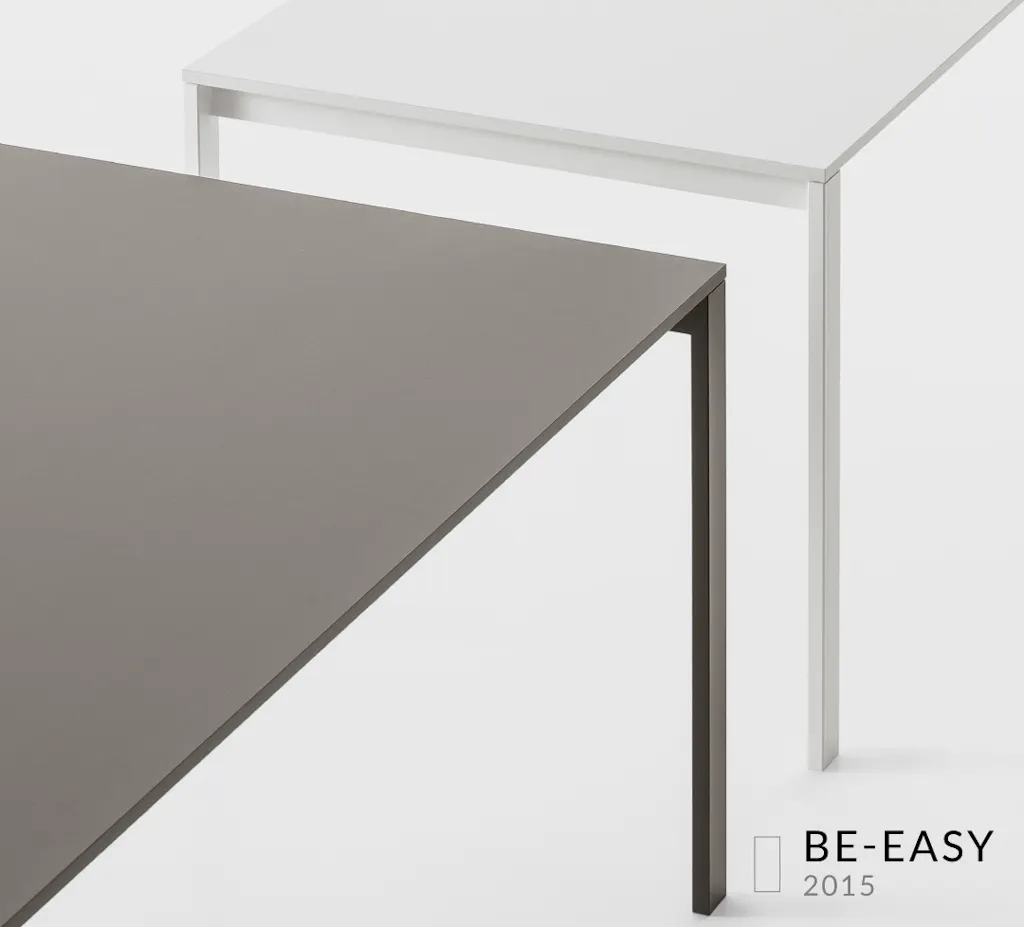
Designed by Bluezone BE-EASY →

BE-EASY | 2015

Developed by Kristalia’s in-house research and development team, Bluezone, be-Easy places material innovation at the centre of its design.

Its defining feature is FENIX-NTM, a surface developed for its extremely matt appearance, soft touch and resistance to everyday wear. The material reduces light reflection while offering resistance to scratches, abrasion, heat and stains.

The table’s powder-coated legs are finished to complement the top, creating a cohesive, almost monolithic appearance. With Kristalia’s expanded FENIX palette, colour becomes an increasingly important part of the design, allowing the table to integrate with a broader range of interior schemes.

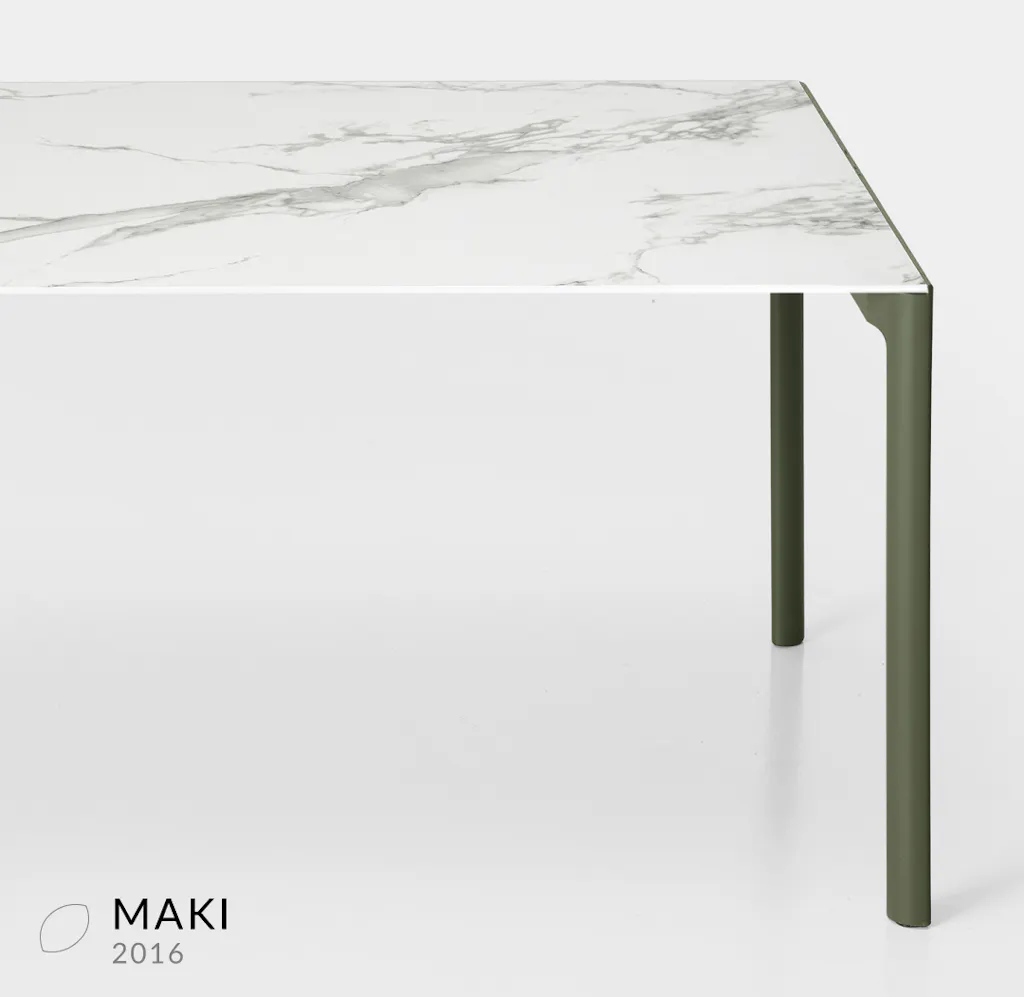
MAKI | 2016

Maki represents another chapter in Kristalia’s long-standing collaboration with Bartoli Design, the studio responsible for Sushi and Nori.

Inspired by the simplicity of oriental design, Maki softens the architectural language of its predecessors. Rounded edges replace sharper profiles, bringing a gentler visual character to the table without abandoning the principles of precision and adaptability.

Its evolution now extends into a richer material palette. Kristalia’s introduction of VIS surfaces adds options inspired by the visual depth and character of natural materials, while the expanded FENIX collection offers greater freedom with colour. Selected surface combinations are also suitable for outdoor settings.

Designed by Bartoli Design MAKI →

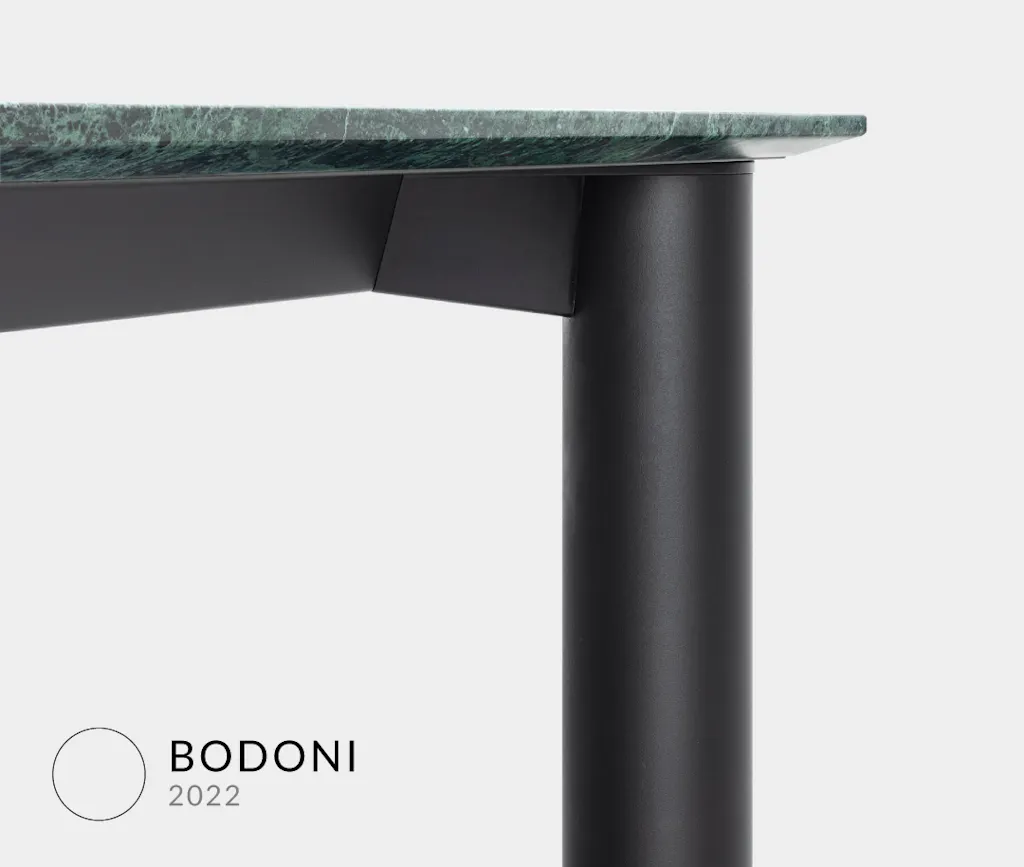
Designed by Bluezone BODONI →

BODONI | 2022

For designers Sam Hecht and Kim Colin, the inspiration came from an unexpected source: typography.

Bodoni takes its name and visual principles from the celebrated typeface, translating the contrast between thick vertical strokes and fine horizontal lines into furniture. Four substantial legs support a comparatively slender tabletop, creating a composition that feels both architectural and graphic.

The thinking extends beyond appearance. The table was also conceived with a simplified assembly process, reducing unnecessary complexity. Available in fixed and extendable versions, Bodoni offers surfaces including FENIX, Laminam and marble, demonstrating how a strong design concept can accommodate different material expressions.

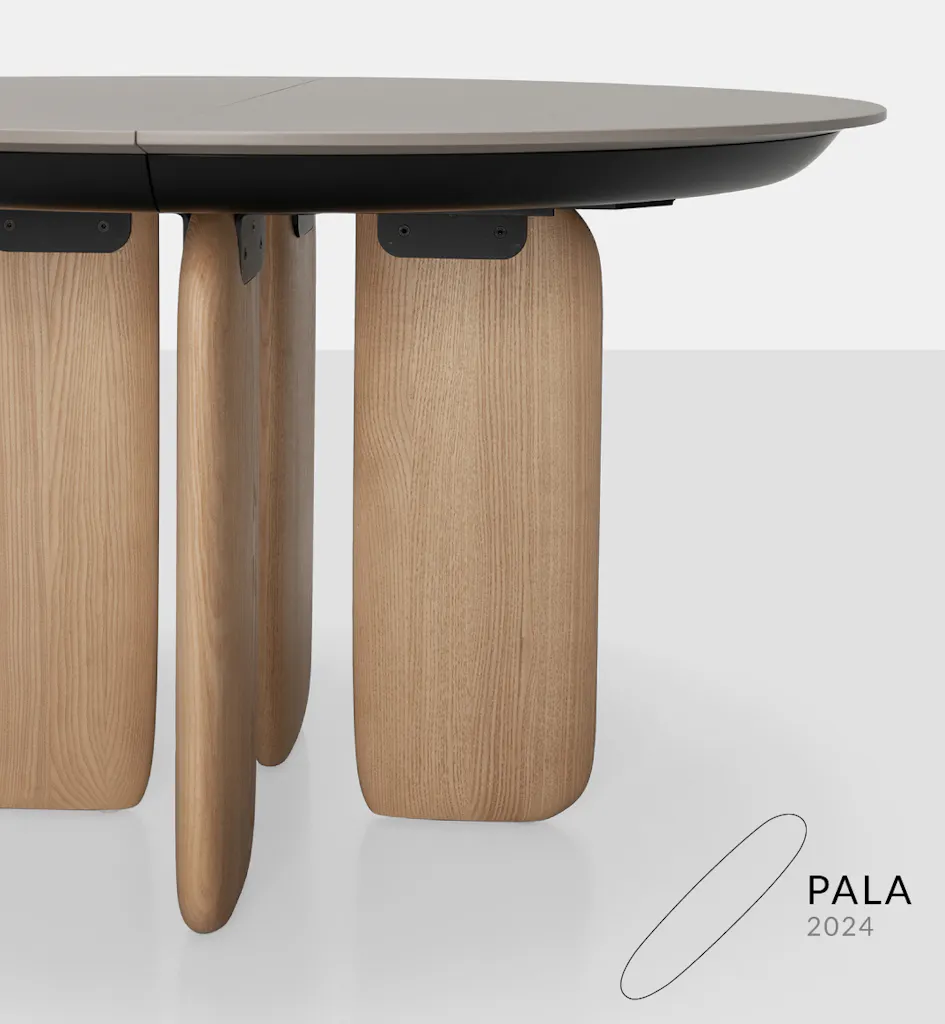
PALA | 2024

With Pala, Monica Graffeo revisits the relationship between sculptural form and mechanical innovation.

The table’s distinctive base draws inspiration from the blade of a rudder, introducing a sense of movement into its architectural silhouette. Its extension system allows the design to transform while preserving the fluidity of its form.

Since its introduction, the collection has expanded to include a new square extendable version, alongside round extendable and fixed configurations. The addition of Argilla, a hand-applied textured finish, gives Pala another dimension, bringing the character of an artisanal surface to a technically sophisticated design.

Pala reflects Kristalia’s continuing belief that innovation should enhance not only how furniture functions, but how it feels to live with.

Designed by Monica Graffeo PALA →

Subscribe to our newsletter
This field is for validation purposes and should be left unchanged.